Summer Weather
Te Puna
Atua: Tāwhirimātea.

Whakapapa
The whakapapa of Tāwhirimātea.
Tāwhirimātea - Whakapapa (PDF, 30 KB)
Pūrākau
Tāwhirimātea
Link to story of Tāwhirimātea.
http://www.TeAra.govt.nz/mi/tawhirimatea/page-1
Waiata
Kotahi Kapua
Karakia
Purea Nei
Link to words and the waiata version of this karakia. http://www.folksong.org.nz/purea_nei/index.html
Whakataukī
He wae kai kapua.
He Atua! He Kōrero!
Tāwhirimātea

Blackout Poetry
What you need
- Photocopies of texts related the Tāwhirimātea (see links below to texts about Tāwhiri)
- Black paint or vivid markers
- Pencils
http://www.teara.govt.nz/mi/tawhirimatea/page-1
What you do
- Watch this video about how to do Blackout Poetry.
- Students choose a text.
- With a pencil, underline words or phrases that they want to include in their poem.
- Remind students:
– to scan rather than read the text;
– to look for key words that relate to the topic;
– to look for connecting words;
– that the poem will be read from left to right and top to bottom.
- Using black markers or paint, students blackout the text they DON’T want, leaving the underlined words.
Note
Have multiple copies of the texts you have selected – students may want to have more than one attempt.
Try other texts – factual and fiction.
Weather Forecasting
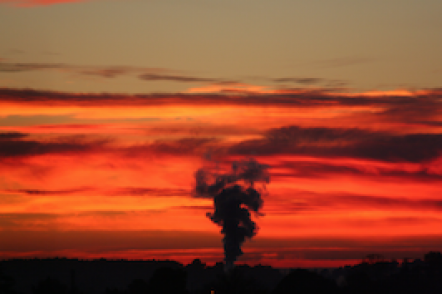
Our ancestors used cloud patterns and colours to predict the weather. Amongst others things, they would observe cloud formations at sunset to tell them if it would rain the following day.
Try some weather forecasting with your students.
- Over a week, students watch and transcribe Te Karere weather forecasts.
- Working from their transcripts have them make up individual and class weather word lists and meanings.
- Students research and collate proverbs and sayings that could be used as part of a weather forecast.
- After a week of forecasting research, make a daily weather forecasting roster where pairs of students forecast the weather.
- Daily forecasters will need to:
– Go to www.metservice.com/national/home
– Find the next day’s weather forecast for Aotearoa – students can choose to use either the short forecast or the extended brief forecast.
– Script the weather forecast in Māori using words and phrases from the lists they created from research.
– Design and make weather icons for the weather patterns they will be describing in their weather reports.
– Set up a weather forecasting backdrop with a large map of Aotearoa. Students present the weather forecast using the map and icons they have created as visual aids.
- Film the weather forecasters in action!
Kotahi Kapua
Biography Film Making
Kotahi Kapua was written by early Te Ataarangi members to honour Dr Kāterina Te Heikōkō Mataira. The song describes how a single person (kotahi kapua) can have a great impact.
Make a series of mini-documentaries on the life and work of Dr Kāterina Te Heikōkō Mataira.
- Start with the focus question: Who was Kāterina Te Heikōkō Mātaira?
- Students research her life and in particular her contributions to Māori.
- From the research make a class profile of her life and work.
- Organise the class into three or four groups. Each group focuses on a thread of her life – Te Ataarangi, Kura Kaupapa Māori, author, and family.
- In groups, students plan a documentary:
– Conduct more extensive research into this part of her life.
– Develop a storyboard.
– Collate images.
– Include interviews – someone in your community who may have been influenced by Kāterina and her work e.g. Te Ataarangi, Kura Kaupapa Māori, readers of her books.
– Shoot footage – both interviews and narratives.
– Consider music e.g. What songs have been written about or by Kāterina?
- Make the documentary and have a film festival to premiere the trilogy on Kāterina’s life and work.
He wae kai kapua
This proverb literally means, “your feet are touching the clouds”. It generally refers to a suggestion considered impractical or impossible. This whakataukī can be used in two ways – either to criticise or to encourage. Use it to encourage and praise those who set a goal and go for it!
Aim High!
- Introduce this activity by talking about achievement and adversity. Look at people who have achieved great things against the odds, and high achieving Māori.
- Watch video clips about Ngā Rauira Pūmanawawh(, Julian Dennison, and Ahorangi Winitana.
https://www.youtube.com/watch?v=Cfl9-I6PaUo
https://www.youtube.com/watch?v=kvEiswADrOs
https://www.youtube.com/watch?v=CR_8CnfaK1U
- Discuss their achievements. Students choose one of these groups (or another high achieving young Māori) to research and build a profile for. Students should pose a series of questions (Who? What? When? Where? Why? How?) to focus their research.
- Students write a report about their ‘high achiever’ and make an oral presentation to the class (or small group). Ask students to answer:
– What have you learnt from them?
– What about them inspires you?
– What do you want to achieve?
- As a class view some examples of ‘vision boards’ (google ‘vision boards’, there are lots of examples). Talk about the different ‘visions’ people have set for themselves – some are short terms visions or goals and some are long-term.
- Students think about something they would like to achieve – a personal goal. Students then make a vision board related to their goal.
- Students give their board a name – names have power!
- Next, draw up a timeline and a step-by-step action plan towards achieving the goal.
- Students keep journals and record progress – all the ups and downs!
- Follow the plan, one step at a time, until they reach their goal.
- Celebrate!
Possible Assessment Opportunities
Students can:
- Create and illustrate a piece of blackout poetry about Tāwhirimātea
- Work cooperatively to produce a documentary on the life of Dr. Kāterina Te Heikōkō Mataira.
- Research and make an oral presentation about an inspirational, high achieving Māori.
- Create a vision board, follow an action plan to a timeline to achieve a goal.
Te Whānau Kapua
Making Clouds

Clouds form from the condensation or cooling of water vapour. Condensation occurs when a gas (water vapour in this activity) changes into liquid droplets (the cloud in this activity).
Another way that condensation occurs is on hard surfaces, e.g. dew on grass; on the outside of a glass of iced water; on the inside of windows in winter.
What you need
- Warm water
- Metal tray
- Ice
- Glass jar
- Match
- Camera or device for filming the experiment
What you do
- Students work in pairs. They are to conduct the experiment and film it.
- Fill a jar with 5 cm of warm water and stir.
- Light a match, blow it out and drop it into the jar.
- When the smoke clears, place an ice-filled metal tray on top.
- Watch carefully and a cloud will form near the top of the jar!
- Students repeat the experiment, but without step 2. What do they notice?
- Pairs discuss what they think is happening.
- Pairs to research condensation and create a diagram showing cloud formation and the water cycle.
- Students edit the film:
– Add narration
– Explain what is happening in the experiment
– Include a diagram (and narrative) explaining condensation and the water cycle.
– Titles, subtitles, credits.
- Present videos to the class.
Note
This link has a lesson plan that includes a number of other experiments to show ‘changing state: condensation’.
http://www.middleschoolchemistry.com/lessonplans/chapter2/lesson3
Identifying Clouds
Cloud identification can be challenging. Try focusing on recognising these four to start with:
- Taipua (Cumulus)
- Pūrehurehu (Cirrus)
- Pūtahi ( Stratus)
- Okewa (Nimbus).
Use this link and download a cloud identification guide.
http://scool.larc.nasa.gov/pdf/1-PageCloudChart/Cloud_ID.pdf
Te Ara has a section on clouds and Māori terminology.
http://www.teara.govt.nz/mi/tawhirimatea/page-3
What you need
- A cloud identification guide for each student pair
- A cloudy day
What you do
- Provide cloud identification guides for each student pair (following). Get students to research the Māori names for the clouds and notes them on the chart. The four most common are:
– Taipua (Cumulus)
– Pūrehurehu (Cirrus)
– Pūtahi (Stratus)
– Okewa (Nimbus)
http://scool.larc.nasa.gov/pdf/1-PageCloudChart/Cloud_ID.pdf
Te Ara has a section on clouds and Māori terminology.
http://www.teara.govt.nz/mi/tawhirimatea/page-3
- As a class, go outside and look at the sky (on a day with clouds). Ask students to use adjectives to describe the clouds they see. Ask questions about clouds like:
– How much of the sky is covered with cloud?
– Are the clouds small or large?
– Are there different types of clouds in the sky today?
– How high up in the sky are the clouds?
- First, identify a cloud together as a class. Then challenge students to identify clouds on their own (using identification charts).
Painting Clouds
Explain that for this lesson they will explore how artists depict clouds in paintings. They will make careful observations and hone their cloud identification skills by looking at clouds in art.
What you need
- Paint colour charts
-
The Art of Clouds presentation (slideshow is in English)
http://www.slideshare.net/LisaGardiner2/seeing-clouds-like-an-artist - Art supplies (paint, colored pencils, colored chalks, paper)
-
Cloud identification guides
http://scool.larc.nasa.gov/pdf/1-PageCloudChart/Cloud_ID.pdf
What you do
- Run through several (or all) paintings in ‘The Art of Clouds’ presentation.
http://www.slideshare.net/LisaGardiner2/seeing-clouds-like-an-artist
-
Have students use their cloud identification guide to help identify the cloud types in a piece of art.
http://scool.larc.nasa.gov/pdf/1-PageCloudChart/Cloud_ID.pdf
Get them to record their answers.
- For each painting, ask students to notice what the weather looks like, the colours and the types of brushstrokes the artist used to paint the clouds. Prompt students to use adjectives to describe what the clouds look like.
- Hand out paint colour samples to the students and ask them to find cloud colours. Ask the group:
– Are all clouds white?
– Are all clouds the same colors?
- Distribute art materials and allow students to paint the clouds they observe. Remind students to look at the shape and colours of the clouds, and their approximate height in the sky.
- Repeat this activity on several days when there are different types of clouds in the sky. Compare the paintings from days with different weather.
- Discuss how students conveyed changes in weather through the colour and shape of the clouds that they painted.
Art Appreciation
- In small groups or as a class, participate in an art appreciation session. Each student presents their artwork and provide some background:
– A particular Impressionist artist that inspired them
– Description of the day that they chose to paint e.g. sun, light and shadows.
– Why they chose the colours they did.
– The techniques they used.
– How they feel about their artwork.
- Following student presentations, the group offers feedback:
– What they like about the painting e.g. colours; paint layering techniques.
– How it makes them feel.
– What types of clouds they think are represented in the work.
– How well they think the colours worked in the painting.
– Is the painting a good representation of the impressionist style? Why? Why not?
– Ask questions of the artist.
Possible Assessment Opportunities
Students can:
- Create and illustrate a piece of blackout poetry about Tāwhirimātea
- Work cooperatively to produce a documentary on the life of Dr. Kāterina Te Heikōkō Mataira.
- Research and make an oral presentation about an inspirational, high achieving Māori.
- Create a vision board, follow an action plan to a timeline to achieve a goal.
- Understand evaporation, condensation and precipitation and the role they play in the water cycle.
- Can identify and classify in Māori and Latin the four main cloud types.
- Paint clouds, matching the shapes, colours and approximate heights in the sky.
- Participate in an Art Appreciation session by presenting their artwork and giving feedback on the work of others.