Kapa Haka
Te Puna
Atua: Hineteiwaiwa.
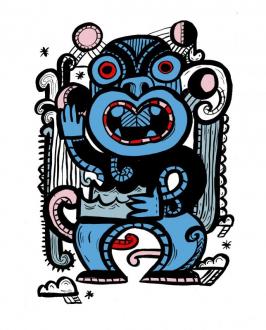
Whakapapa
The whakapapa of Hineteiwaiwa.
Hineteiwaiwa - Whakapapa (PDF, 40 KB)
Pūrākau
A Hineteiwaiwa
Written by Hana Pōmare, item number 700124.
https://hana.co.nz/online/hina/
Waiata
Hineteiwaiwa
Composed by Nuki Tākao.
This waiata acknowledges Hineteiwaiwa, the lyrics are from a karakia composed by Nuki Tākao and the music is composed by Wai.
Hineteiwaiwa is from the album Ora, by Wai, and is available from the iTunes store.
"Ko te whiri
Ko te whatu
Ko te whakairo
Nāu rā e Hine
Nau mai e Hine
Ki Te Whare PoraKo te whenua
Ko te whakatipuKo te whānautanga mai
Nāu rā e Hine
Nau mai e Hine
Ki Te Whare TangataWhakamaua te tai moana
Whakamaua te ira tangata
Whakamaua te aho matua
Whiri, whiria kia tina
Hui e, tāiki e!"
Karakia
Tērā a Marama
Composed by Nuki Tākao.
"Tērā a Marama ka mahuta i te pae
Te whakatāhuna i te ngaru
Te whakaaio i te whenua
A kōhiti
A whanake
A rākaunui
A tohi
Taiahoahotia tōku ara i te pō!"
Whakataukī
"Ānō ko te marama kua ngaro, kua ara anō."
He Atua! He Kōrero!
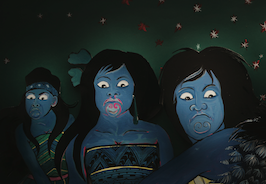
Hineteiwaiwa
Ako ā-Kākā
Rote learn the whakapapa of Hineteiwaiwa.
Hineteiwaiwa - Whakapapa (PDF, 40 KB)
Students choose one of the following formats, writes out and then memorises Hineteiwaiwa’s whakapapa.
- Ka moe a Ranginui i a Papatūānuku, ka puta ko Tānemāhuta.
- Nā Ranginui rāua ko Papatūānuku, ko Tānemāhuta.
- Nā Ranginui ko Tānemāhuta. Nā Tānemāhuta ko Hinetitama.
A Hineteiwaiwa
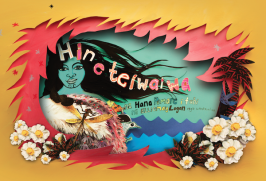
What you need
-
A Hineteiwaiwa online resource and student book
https://hana.co.nz/online/hina/
What you do
- Introduce the story A Hineteiwaiwa and write up focus questions for students to consider while listening to the story, e.g.:
– What did Kae do to Tutunui and why?
– How did Hineteiwaiwa and her fellow women trick Kae during the feast?
– How were whales regarded by our tūpuna?
- Play the interactive A Hineteiwaiwa story for your class.
- Ask the students to identify the main characters in the story. Discuss the role each character played in the sequence of events (cause and effect).
- Then ask students to identify the moral or lesson of the story and how it could be applied today.
Interviewing Characters
- Separate students into two groups. One group are the interviewers from Māori Television and the other group take the roles of the characters from the story A Hineteiwaiwa.
- Interviewers collaborate and record interview type questions to ask each character based on what they heard in the story, for example:
Tinirau
– What is the name of your baby?
– Why did you want Kae to perform special rites for your baby?
– Hineteiwaiwa
– How did you find Tutunui?
– How did you feel when whale meat was served for dinner?
- In preparation for the interviews, the character group records all the information they know about their characters based on the story.
- The interview group then carries out its interview with the character group.
Tērā a Marama
Ako ā-Kākā
- Rote learn the karakia, Tērā a Marama, practise and recite on appropriate occasions.
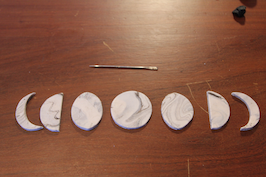
Phases of the Moon Mobile
Make a mobile or wall-hanging showing the phases of the moon.

http://almostmakesperfect.com/2015/01/14/diy-marble-moon-phase-wall-hanging/
- The 8 phases of the moon represented here are:
– New moon
– Waxing crescent
– First quarter
– Waxing gibbous
– Full moon
– Waning gibbous
– Third quarter
– Waning crescent
What you need
- 2 packages of black Fimo (or any other polymer clay)
- 1 package of white Fimo
- Round cookie cutter
- Ruler
- Craft knife
- Toothpicks
- String, needle & thread (or fishing line/fine wire)
- Rolling pin
What you do
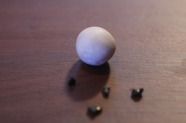
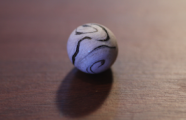
- Shape clay into 7 white balls.
- Add some small pieces of black to your white and roll to get a marbled effect. Don’t overdo it or you will end up with a grey ball.
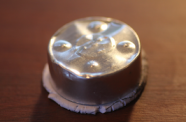
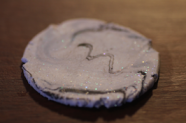
- Roll out each piece to 5mm thick.
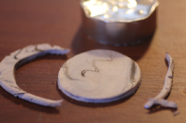
- Use the cookie cutter to cut circles and to make the shapes of the waxing and waning moons. Use straight edge for the half-moons.
- Use a toothpick to poke a hole in the top of each moon. Bake according to directions.
- Once baked and cooled, tie your moons together with fishing line.
|

|
|
|
|
|
Observing the Moon’s Phases
What you need
- Copies of ‘Ngā Āhua o te Marama PDF, either A3 or A4 (1 per student)
- Camera (optional)
- Pencils
- Compass
Ngā Āhua o te Marama (PDF, 24 KB)
What you do
- Students fill in the phases of the moon observation chart every night for a month. Get them to:
– Sketch or photograph the moon each night.
– Write down what time they saw it.
– Note where in the sky it was (i.e. overhead; in the east).
– Some nights may be cloudy, get them to record this too.
- On a set day each week, review the moon charts as a class exercise. Focus on:
– The shapes of the moon and the different terms for describing them.
– The different times of day that they observe the moon.
– Getting them to predict the moon’s shape for the following week and what time of day and where in the sky they think they will observe it.
- At the end of the month, ask students to identify the moon phases:
– New moon
– Waxing crescent
– First quarter
– Waxing gibbous
– Full moon
– Waning gibbous
– Third quarter
– Waning crescent
- Organise the students into groups of three or four. They are to compare their observations and make short oral presentations about their findings.
Hineteiwaiwa
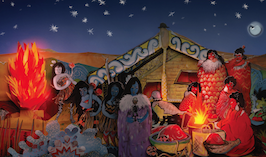
Hineteiwaiwa was written as a karakia to acknowledge and honour the deity we see as the moon. Hineteiwaiwa is the goddess of women in childbirth and the House of Weaving. She is the protector of women and children. Hineteiwaiwa controls the tides of the earth mother, Papatūānuku as well as the menstrual tides of women.
- Organise the class into groups of 4 to research the 3 verses of the karakia beginning with:
Ko te whiri …
What is Te Whare Pora?
The words ‘whiri’, ‘whatu’ and ‘whakairo’ are weaving terms.
Research these words in the context of weaving and discuss the meanings.
Why did the author of this karakia use these terms?
What do you think she meant?
Ko te whenua …
What is Te Whare Tangata?
The words ‘whenua’, ‘whakatipu’, ‘whānautanga mai’ refer to pregnanacy and childbirth. Research these words in the context of weaving and discuss their meanings.
Why did the author of this karakia use these terms?
What do you think she meant?
Whakamaua …
What do these words and phrases refer to?
Whakamaua te tai moana
Whakamaua te ira tangata
Whakamaua te aho matua
Whiri, whiria kia tina
Hui e. Tāiki e.
- Have each group report back to the class by:
- Telling us definitions of the word/s.
- Giving us at least one synonym for the word/s.
- Using the word/s in a sentence.
- Explaining the context that the word/s would be used in.
- Performing a charade to demonstrate visually the meaning of the word.
Ānō ko te marama kua ngaro, kua ara anō
This whakataukī says that we can be just like the moon that disappears and rises again. If we were more like the moon we would keep on going no matter what the adversity.
- Choose an ancestor, or relative, who has overcome adversity.
– What are the characteristics of someone who overcomes adversity?
– Did that person have any special attributes?
– What was the event that challenged your ancestor to become determined and more resilient?
- Tell us their story and how they overcame adversity.
-
Write it as a ‘tuhinga mihi’. You could use the book He Tuhinga Mihi, from the He Manu Tuhituhi resource, to guide the writing.
- Students could perform their mihi to each other in small groups.
Possible Assessment Opportunities
Students can:
- Recite the whakapapa Hineteiwaiwa using a traditional format for recalling whakapapa.
- Identify the main characters in a story and their role in the sequence of events.
- Identify the moral/lesson of a story and apply to today.
- Prepare open-ended questions for a character in the story A Hineteiwaiwa.
- Prepare possible answers to interview questions as a character in the story, A Hineteiwaiwa.
- Answer a minimum of three comprehension questions.
- Work cooperatively to contribute at least two interview questions each for a character in the story, A Hineteiwaiwa.
- Recite the karakia, Tērā a Marama.
- Chart the moon’s phases over a calendar month, recognise and name the 8 main phases.
- Explain the meaning of Ko te Whiri and talk about appropriate times and occasions for using the karakia.
- Tell the story of an ancestor or relative who has overcome adversity.
- Compose a tuhinga mihi to that ancestor or relative who has overcome adversity.
Kapa Haka
Composing Waiata
What you need
- A Hineteiwaiwa – https://hana.co.nz/online/hina/
- Music for two selected waiata (one traditional and one contemporary)
- Copies of the lyrics for the two waiata
What you do
Comparing modern and traditional waiata
- Organise students into small groups. Students are to:
- View the story A Hineteiwaiwa – https://hana.co.nz/online/hina/
- Students listen to a popular modern waiata, e.g. Ka Poipoia by Rob Ruka.
- Have students discuss the meaning and mood of the waiata they have been listening to.
- Then look at how the lyrics were written, e.g. the use of imagery, metaphor, number of verses, chorus, and repetition.
- Talk about the actions or movements that go with the waiata, or could go with the waiata, in order to help tell the story.
- This activity can be used for a more traditional waiata, with an emphasis on understanding the meaning and story behind the words (an important element of kapa haka).
- Discuss the customs and traditions surrounding performing waiata in kapa haka, for example: What has changed? What has remained the same?
Writing the lyrics
- In their groups, students are to compose their own short waiata about the story of Hineteiwaiwa.
- The waiata should have two verses and a chorus. (It’s important that you model how a verse and chorus could be written.)
- An easy way is to make the words poetic with rhyme and repetition and put the words to an easy or familiar tune for easy recall.
- Groups have finished composing their waiata when they can confidently sing it together to a tune.
Note
You may want to use He Manu Tuhituhi resource to facilitate composition:
- He Tuhinga Mihi
- He Tuhinga Whakangahau
- And their corresponding support notes in He Kura Tuhituhi me He Manu Taketake.
He Tuhinga Mihi
He Tuhinga Whakangahau
He Tuhinga Whakangahau (PDF, 27 MB)
He Kura Tuhituhi me he Manu Taketake
He Kura Tuhituhi me He Manu Taketake (PDF, 5 MB)
Performing the waiata
- Watch clips of favourite groups from kapa haka competitions such as Te Matatini, National Secondary School’s Kapa Haka Competition and Mana Kura Tahi. You may even have footage of kapa haka groups from your own kura/iwi.
- After watching, and still in their groups, ask students to brainstorm some of the actions and choreography that they particularly enjoyed and think might work with their composition.
- Groups can now start adding their own actions to support the words being sung.
- Students then choose who will take the leadership roles e.g. kaitātaki or perhaps provide the musical accompaniment e.g. ukulele, guitar, drums, kōauau, pūrerehua.
- Choreography is the final stage – How do they stand and move on the stage to support the words being sung.
- Each group performs their version of a waiata about Hineteiwaiwa.
Possible Assessment Opportunities
Students can:
- Identify three similarities and three differences between the composition and meaning of a traditional and a modern waiata.
- State why it is important to understand the meaning and story behind the lyrics of waiata used in kapa haka performance.
- Work cooperatively to compose a short waiata with two verses and a chorus (using imagery, metaphor, repetition and rhyme).
- Identify customs and traditions relating to performing waiata and suggest how these have changed or remained the same.
- Add and choreograph actions that enhance the words of a waiata and perform their ‘Hineteiwaiwa’ waiata.