Kapa Haka
Te Puna
Atua: Hineteiwaiwa
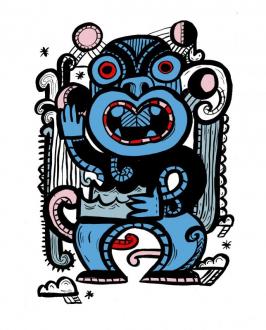
Whakapapa
The whakapapa of Hineteiwaiwa
Hineteiwaiwa Whakapapa (PDF, 38 KB)
Pūrākau
A Hineteiwaiwa
Waiata
Whiti te marama
Composed by Hirini Melbourne. Sung by Lisa Tomlins.
Whiti te marama (SoundCloud)
"Whiti te marama i te pō
Tīaho iho mai koe
Hei karu mō te mata o te pōTō ana te rā ki te moe e
Tīaho iho mai koe
Hei karu mō te mata o te pōKi te kore koe te karu o te pō
Pōuri ana taku ara eHoki ana ahau ki te moe e
Tīaho iho mai koe
Hei karu mō te mata o te pōWhitiwhiti ana e te marama i te pō"
Karakia
Tērā a Marama
Composed by Nuki Tākao.
"Tērā a Marama ka mahuta i te pae
Te whakatāhuna i te ngaru
Te whakaāio i te whenua
A kōhiti
A whanake
A rākaunui
A tohi
Taiahoahotia tōku ara i te pō!"
Whakataukī
Me he Ōturu ngā karu.
https://www.museumswellington.org.nz/wp-content/uploads/2022/01/Matariki-booklet.pdf
He Atua! He Kōrero!
Phases of the Moon
Check out this website, The Moon:
http://www.primaryhomeworkhelp.co.uk/moon/phases.html
There are many interesting facts and about the moon appropriate for this level.
What is ‘the phase of the Moon’?
The lunar phase is the amount of the Moon you can see from Earth depending on how much of it is lit up by the sun. This amount changes each day.
What causes part of the Moon to be lit up?
The moon is illuminated because it reflects the light from the sun. The part of the moon facing the sun is lit up. The part facing away from the sun is in darkness.
What causes the different phases of the Moon?
The phases of the Moon depend on its position in relation to the Sun and Earth. As the Moon makes its way around the Earth, we see the bright parts of the Moon's surface at different angles. These are called "phases" of the Moon.
What are the different phases of the Moon called?
The phases of the moon work in a cycle starting with the new moon. A complete cycle of the Moon's phases from new Moon to full Moon takes twenty-nine and a half days.
The Maramataka in the Matariki booklet, published by Te Taura Whiri has the names of each of these phases in te reo Māori.
Te Taura Whiri i te Reo Māori: Matariki
This link to the Royal Astronomical Society of New Zealand has a great series of images of the moon phases as seen in Aotearoa.
http://rasnz.org.nz/in-the-sky/lunar-phases
New = Kōhiti
Waxing Crescent = Pewa Whanake
First Quarter = Hauwhā Tuatahi
Waxing Gibbous = Kōpuku Whanake
Full = Kua Hua
Waning Gibbous = Kōpuku Tohi
Last Quarter = Hauwhā Whakamutunga
Waning Crescent = Pewa Tohi
Why Does the Moon Look Like This?
Demonstrate the moon’s phases with your students. Students should name the phases that they see.
This YouTube video demonstrates the activity.
https://www.youtube.com/watch?v=wz01pTvuMa0
Note
This teacher is showing Northern Hemisphere phases. Your students should rotate in a clockwise direction.
What you need
- A very bright lamp
- Styrofoam balls
- Pencils
- Students stand in a big circle around the room. Place a lamp, with a naked bulb in the centre of the circle. Try to get the room as dark as possible, to get the best effect.
- Students each have a pencil with a styrofoam ball stuck on the end it. Holding their ball out in front of them they rotate on the spot, in a clockwise direction. (Their head is the Earth, the ball is the Moon and the lamp is the sun.)
- As they rotate the shadow that their head makes on the ball, shows the phases of the moon.
Moon Phase Board
Make a Moon Phase Board like this one to demonstrate moon phases in another way. Instructions can be found at:
http://www.scienceteachingjunkie.com/2013/03/clearest-way-to-teach-moon-phasesever.html
A Hineteiwaiwa
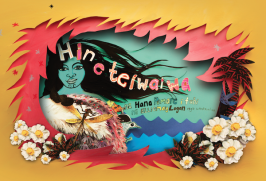
Use the online story – this story is told using Flash – use it with a computer and data projector, interactive whiteboard, computer or laptop.
hana.co.nz/online/hina/
- Introduce the story A Hineteiwaiwa and place three focus questions on the board for students to think about while the story is read to the students, for example:
-
- Why did Tinirau slice flesh from Tutunui’s body?
- What did Kae do to Tutunui?
- How did Hineteiwaiwa and her fellow women find Kae during the feast?
- Go to hana.co.nz/online/hina/ and watch the story ‘a Hineteiwaiwa’. Click on ‘tuhinga’ if you want to view the text. You can also source published versions from Down the Back of the Chair for shared and independent reading (item number 700124).
- Ask students to identify the main characters in the story.
- Discuss the role each character played in the sequence of events.
- Then ask them to identify what the moral or lesson of the story is and how it could be applied to today.
- Role Play: put students into small groups and give each group a part of the story to present as a role-play that they perform in sequence to retell the story in their own words.
Whiti te Marama
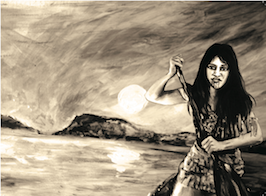
This waiata is an absolute classic! Written and performed by Hirini Melbourne, teach it to your class and sing it at every opportunity. (This version is sung by Lisa Tomlins.)
- Make a word list from the song and karakia:
Whiti
Marama
Pō
Tīaho
Karu
Mata
Pōuri
Ara
Tērā
Mahuta
Pae
Whakatāhuna
Word Detectives
What you need
- Strips of paper to make ‘word crowns’
- Recording sheets that include spaces to write a word’s synonym, antonym, definition, and a space to write the word (or use this template)
He Tekitiwhi Kupu 2 (PDF, 20 KB)
What you do
- Write a new word on each strip and staple it to make a “crown.”
- Place a crown on each student’s head. Students aren’t allowed to see their own word.
- Have students walk around the room and ask another student a question from their recording sheet, e.g. “Pare, what is a synonym for my word?”
- The student writes down Pare’s answer on the recording sheet. Then Pare asks a question about her word.
- Students move around the room to ask another question of a different classmate.
- Play continues until students have answered all the questions on the recording sheet. When they are done, they use the clues to figure out their word.
Tērā a Marama
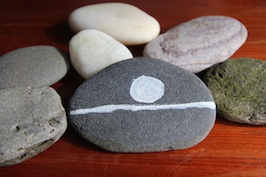
Teach each line of the karakia, Tērā a Marama, with story stones. If you live close to a river or beach go out with your class to collect stones – the flat rounded ones are best and each student needs 8 stones.
What you need
- 8 flat, rounded stones for each student
- Coloured permanent markers (not felts) or acrylic paints and small paintbrushes.
What you do
- Students sit in a circle with their 8 stones and chosen permanent markers (or paints & brushes) in front of them.
- Recite the first line of the karakia, “Tērā a Marama ka mahuta i te pae”. Ask them to recite it with you until they have grasped it.
- Explain what this means and ask them to draw or paint something on their first story stone that represents this sentence. It can be a symbol, a picture or even a word.
- Give them enough time to finish without feeling pressured.
- Do the same with each line of the karakia until all 8 story stones have been completed.
- Then recite the karakia as a class using story stones as prompts. As a daily practice, choose a student (or ask someone to volunteer) to lead the karakia, using his/her stones.
Me he Ōturu ngā karu
This whakataukī refers to the large bright eyes of an attractive women, likening her eyes to the full moon in the night sky.
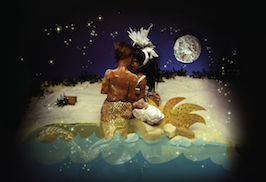
Use the Maramataka to learn the names for the 30 phases of the moon according to our ancestors. These are not the only names, there are others in He Pātaka Kupu and there will be iwi specific names too. However, according to this lunar calendar, Ōturu is day 15 of the lunar month, just before full moon. You could teach them as a song, rotarota and/or hand game.
Possible Assessment Opportunities
Students can:
- Participate in the whole class “word-off” activity, working cooperatively to help each other discover “their word” – using antonyms, synonyms, descriptions and context.
- Answer a minimum of three comprehension questions about the story A Hineteiwaiwa.
- Work cooperatively to create a role-play about a section of the story A Hineteiwaiwa.
- Recite Tērā a Marama using the story stones.
- Participate in a whole class quiz game on moon facts.
- Recall the 30 days of the lunar month.
- Make a phases of the moon fold-out booklet.
Kapa Haka
Recount a Kapa Haka Performance – planning, drafting and publishing.
What you need
- Class set of the student text Kapa Haka (item number 700122) – 1 per student
- Copies of Mahere Taki Kōrero PDF
Mahere Taki Kōrero (PDF, 40 KB)
What you do
- Introduce the text Kapa Haka.
- Ask students to share their experiences of kapa haka, for example:
-
- festivals they have participated in
- rehearsals
- costumes
- the different roles people have within a kapa haka group
- the different waiata and haka
- favourite elements
- discipline.
- Ask questions to stimulate discussion:
-
- What kapa haka groups do you know about?
- Why is it important to belong to kapa haka groups?
- What roles and responsibilities do people have in a kapa haka group?
- How do kapa haka groups contribute to our school and community?
- Ask students to plan and draft a recount of the most recent performance they have participated in or watched.
- Guide them through the process of writing a recount using copymasters 1 and 2.
- Purpose – The purpose of a recount is to retell events.
- Structure – Set the scene. Include who, when, what, where and why, e.g. “On Friday I participated in the Kapa Haka festival at the Town Hall.”
- Features – Recounts are written in the past tense (in the first or third person). Focus on language used to link ideas, thoughts and sequence, e.g. first, next, then, after that, finally.
- Students then record and describe events in order using linking words.
- A recount will often have a closing statement, e.g. “I left the festival buzzing with excitement.”
- Students publish their recounts for class display.
Possible Assessment Opportunities
Students can:
- Share personal experiences about kapa haka and can identify why kapa haka is important to them and others.
- Use a variety of sentence beginnings and conclude a recount with a statement that summarises or comments on events.
- Follow the process for planning, drafting, editing and publishing a recount of a kapa haka performance.